
Just Compassion
NORTH BUILDING
Location
Tigard, OR
Helm’s Role
Development,
Architecture,
Interior Design,
FF&E Procurement
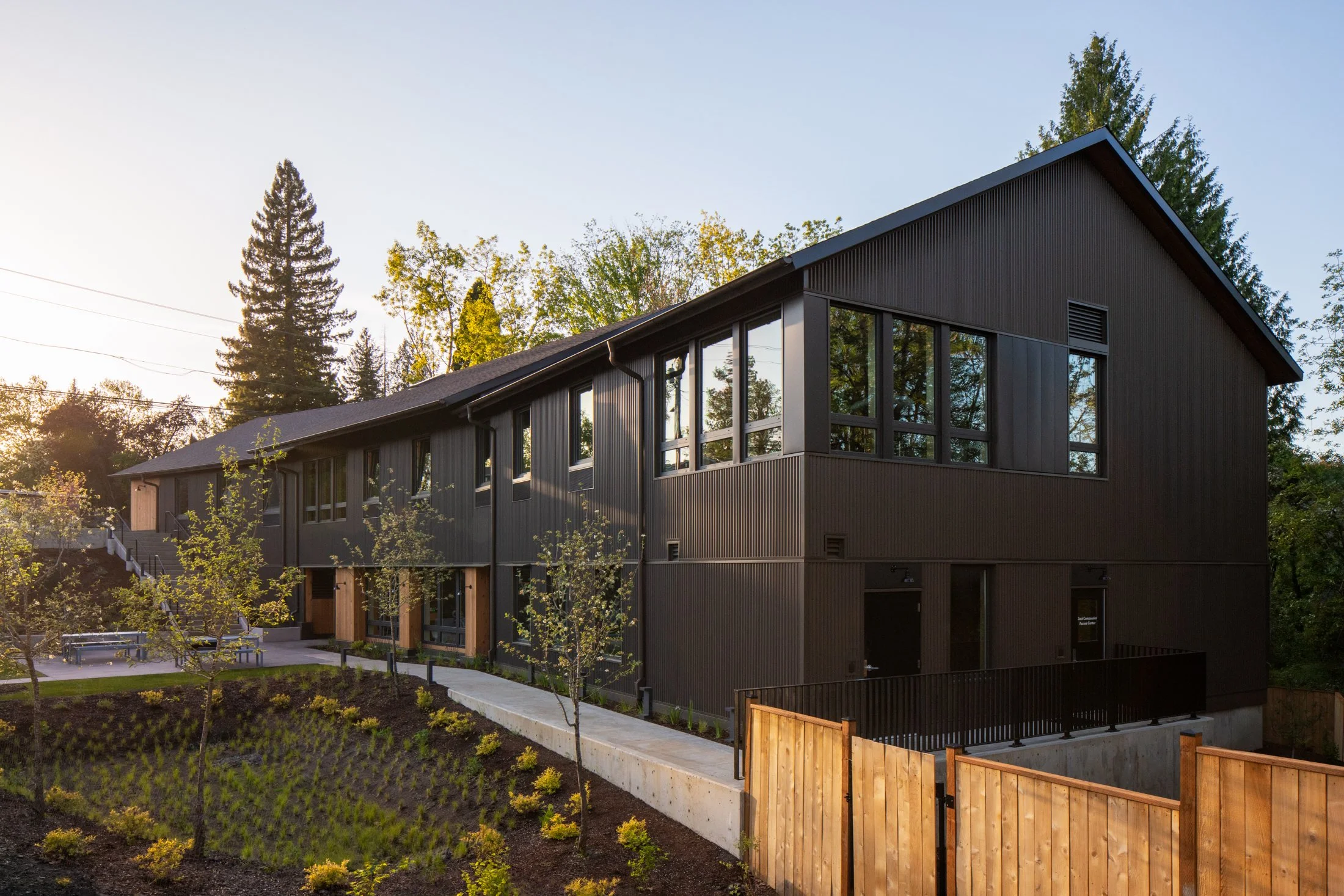
Just Compassion is a nonprofit serving houseless adults in Washington County. Helm partnered with the organization to design a safe, welcoming resource center with accessible emergency housing for unhoused and marginalized individuals. The nearly 10,000-square-foot, purpose-built facility—the county’s first—includes a day center with dining, bathing, and social services on the ground floor, and a 60-bed emergency shelter above. Designed to function as a community shelter during emergencies, the building has a backup generator to remain fully operational during outages. Its structure also supports energy generation, with rooftop solar panels producing more than 100% of its modeled electrical use.
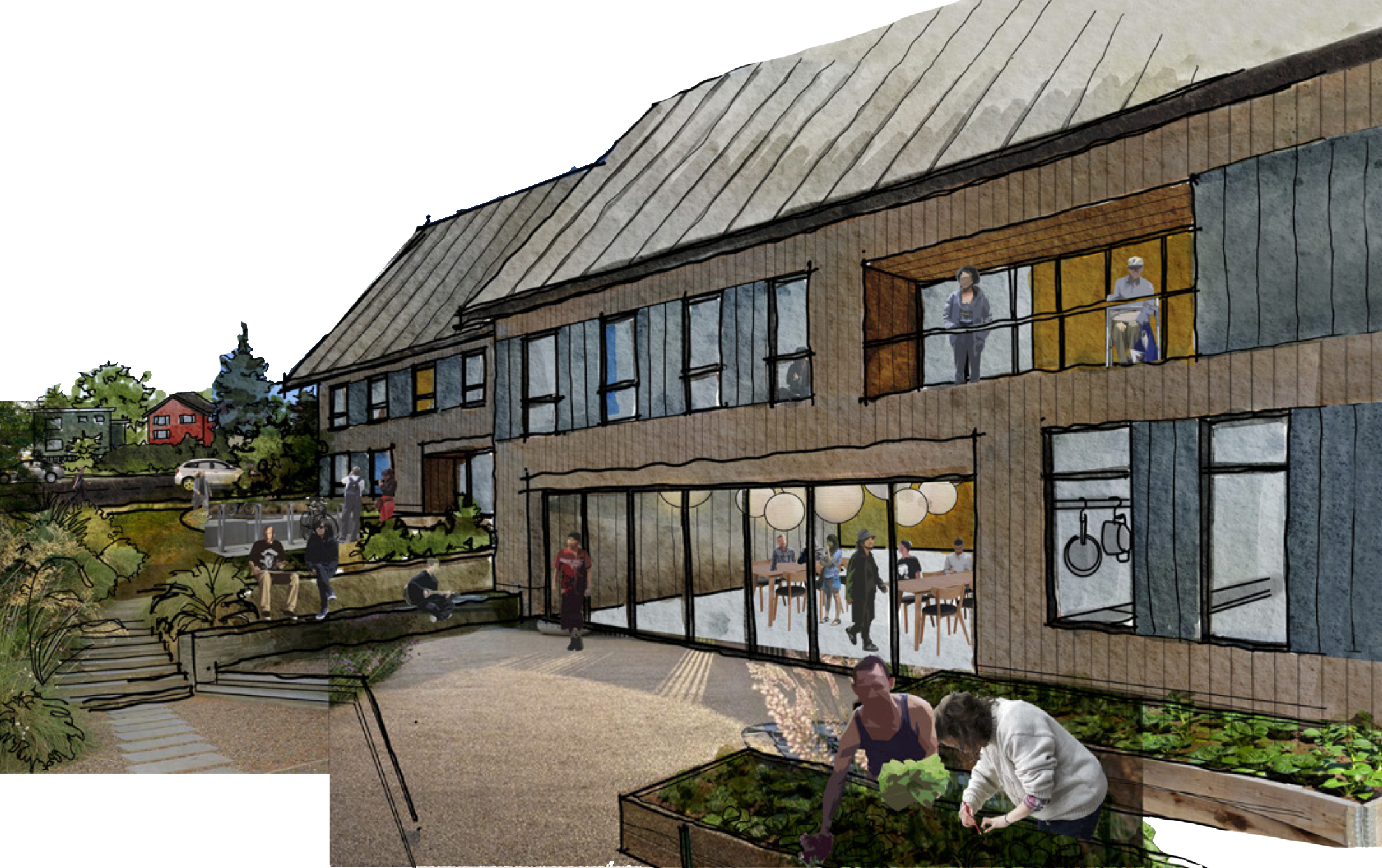
The center emphasizes human-centered design, balancing warm, residential finishes with safety and security needs. Residential aesthetics and a vibrant color palette create a welcoming, uplifting atmosphere, inspired by the natural tones of the Pacific Northwest and incorporating recycled materials. The layout and furnishings support both privacy and connection, fostering safety, dignity, and a sense of ownership. Community storytelling is reflected through sourcing from formerly homeless, local, independent, and BIPOC artists and makers. Just Compassion envisions a space where guests are seen, heard, and known—building relationships that meaningfully impact lives.
Studio
Community
Year Complete
2025
Client
Just Compassion
Funding Sources
Grants
Public
Private
Awards & Press
2025 Interior Design Best of
Year Awards: Social Impact
General Contractor
Walsh Construction
Structural Engineer
KPFF Consulting Engineers
Civil Engineer
Humber Design Group
Landscape Designer
Studio Wild
Photographer
The Morrisons
Collaborators
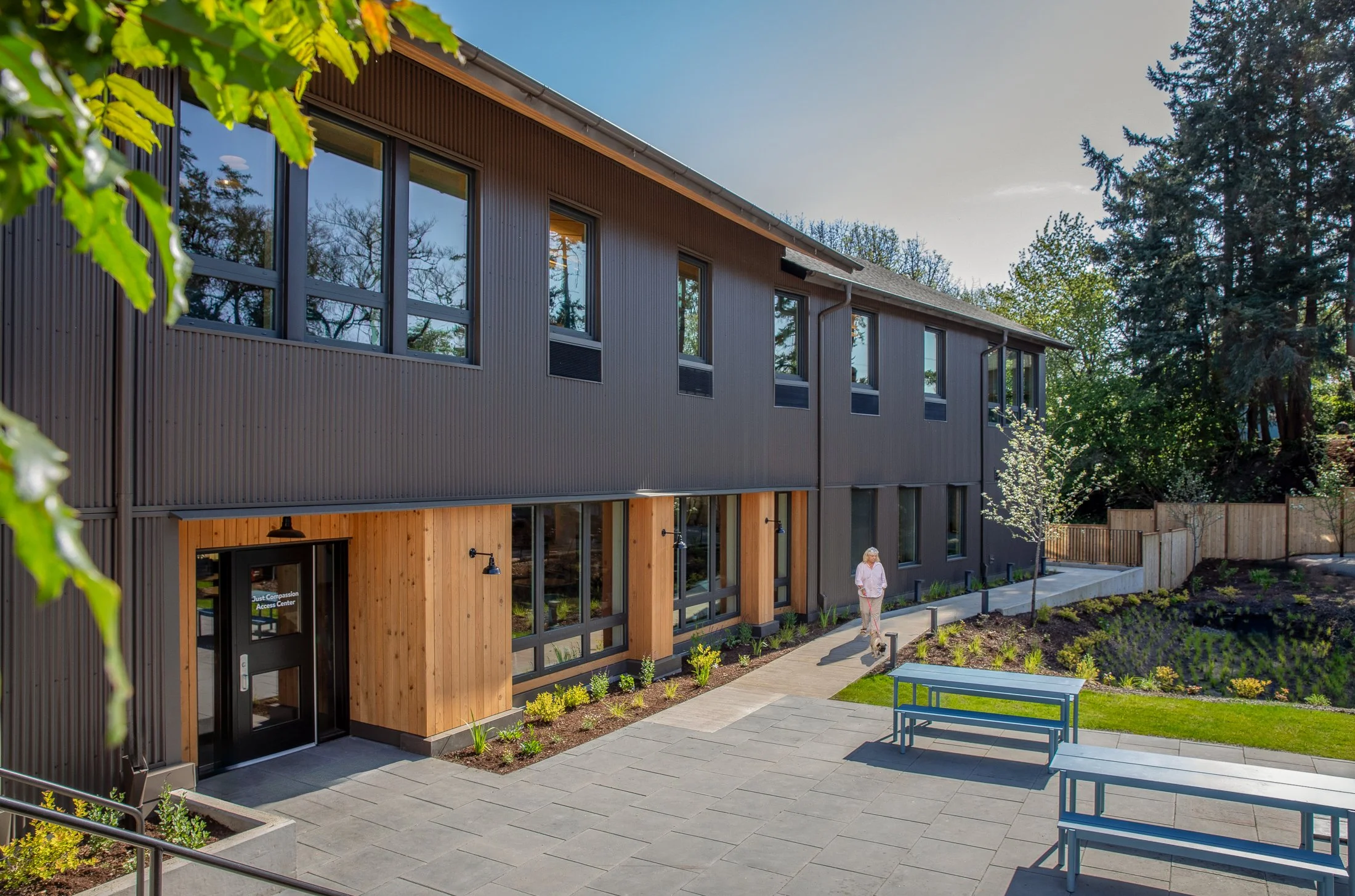
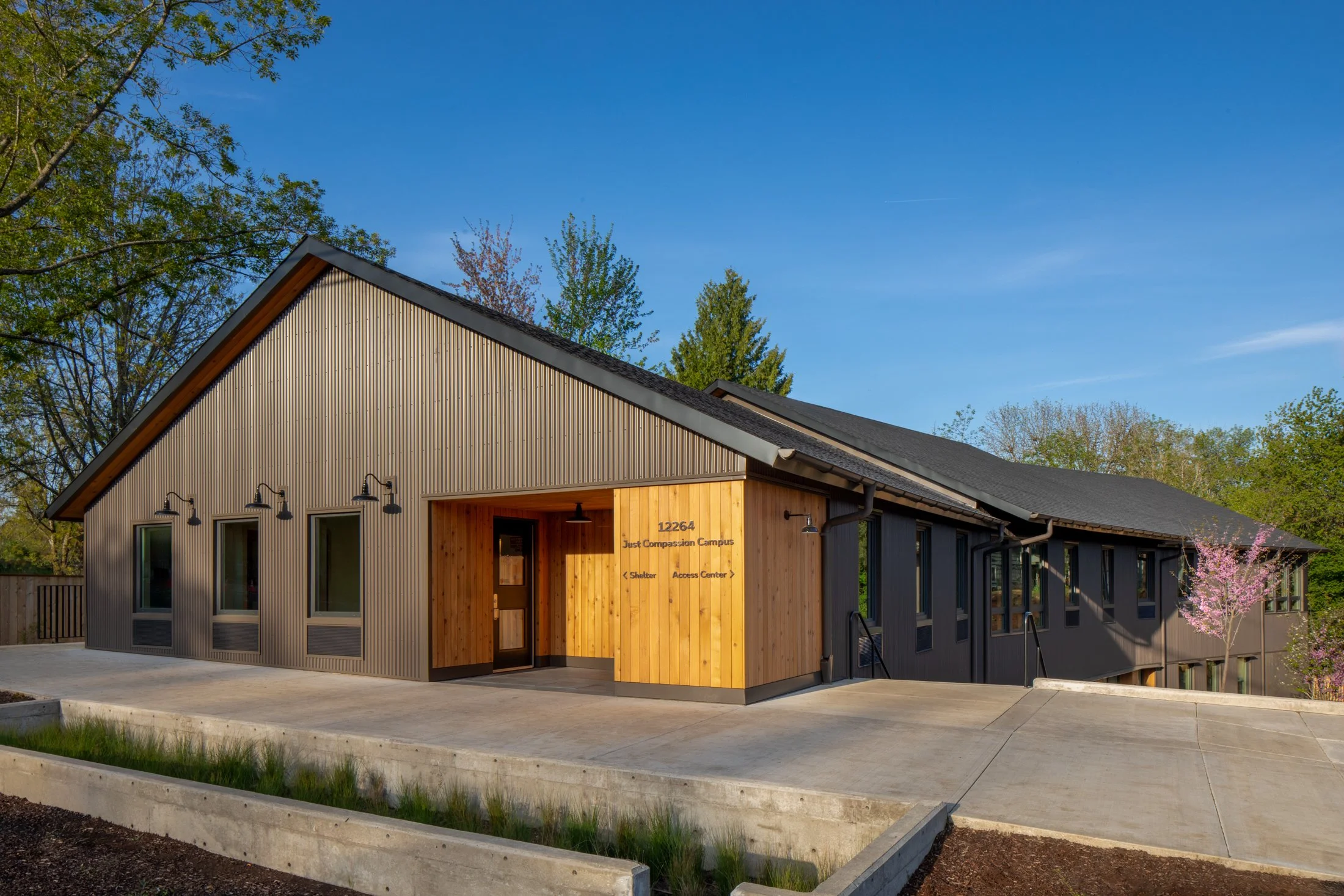
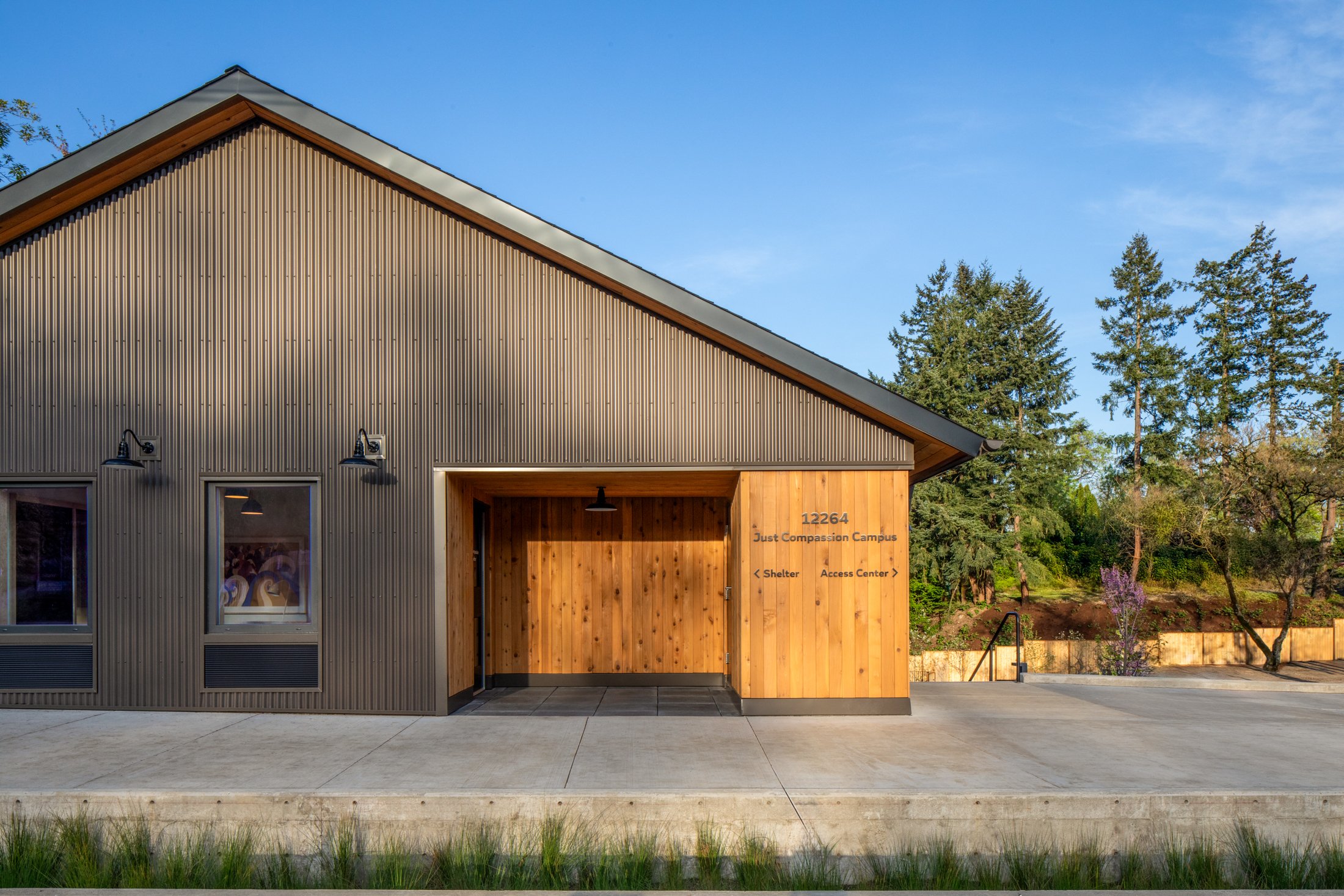
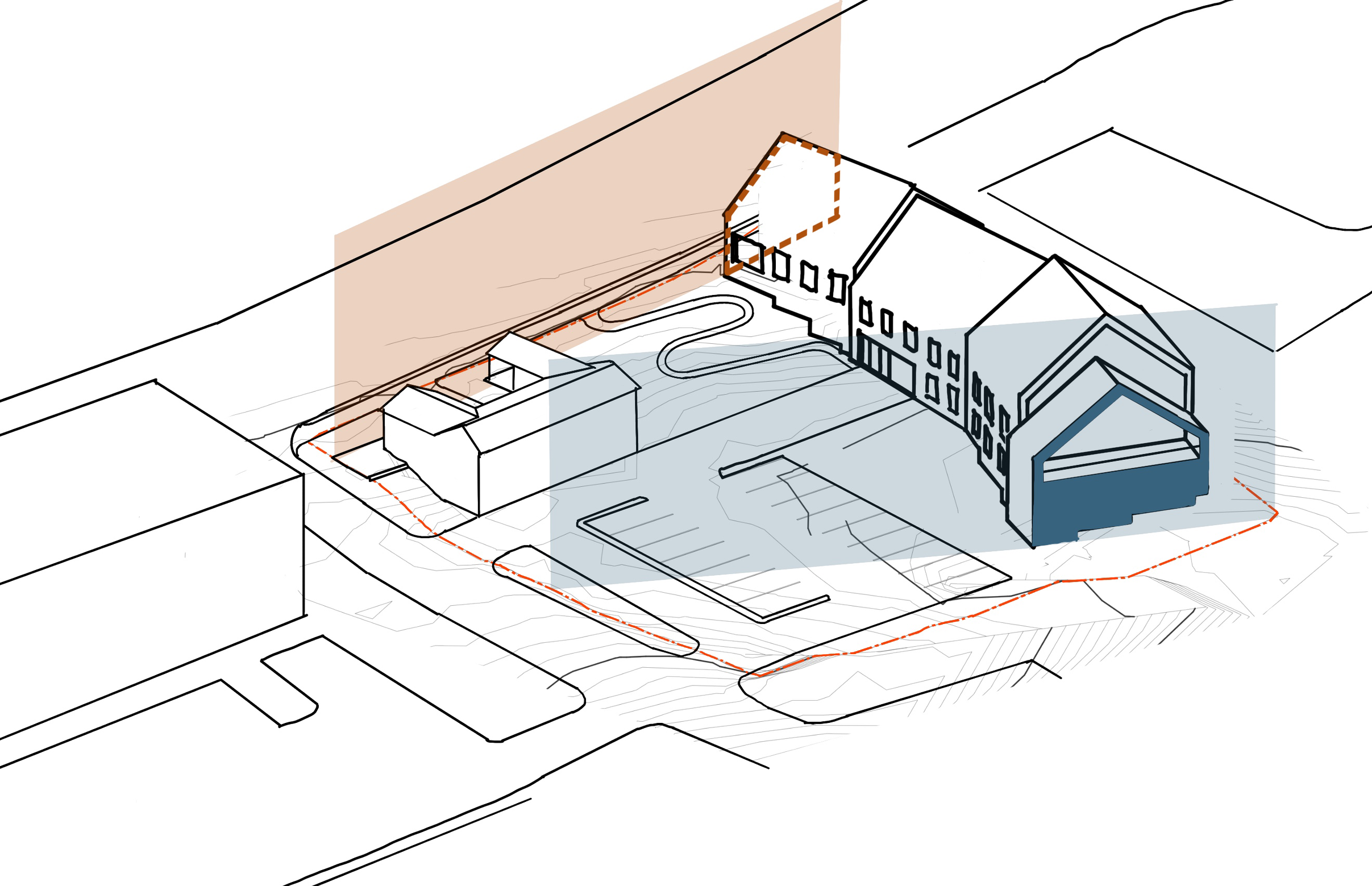
At home on the edge of a residential neighborhood, Just Compassion North presents just one of its two stories to the street. The building’s shape arches to receive southern light and wraps around the courtyard, creating a protected outdoor room where guests are welcomed. The warmth of wood makes entry locations easy to read, while banks of windows along the ground floor allow guests to have visibility and feel safe. Inside, bends in the floor plan break up a large building into welcoming and residential scale spaces.
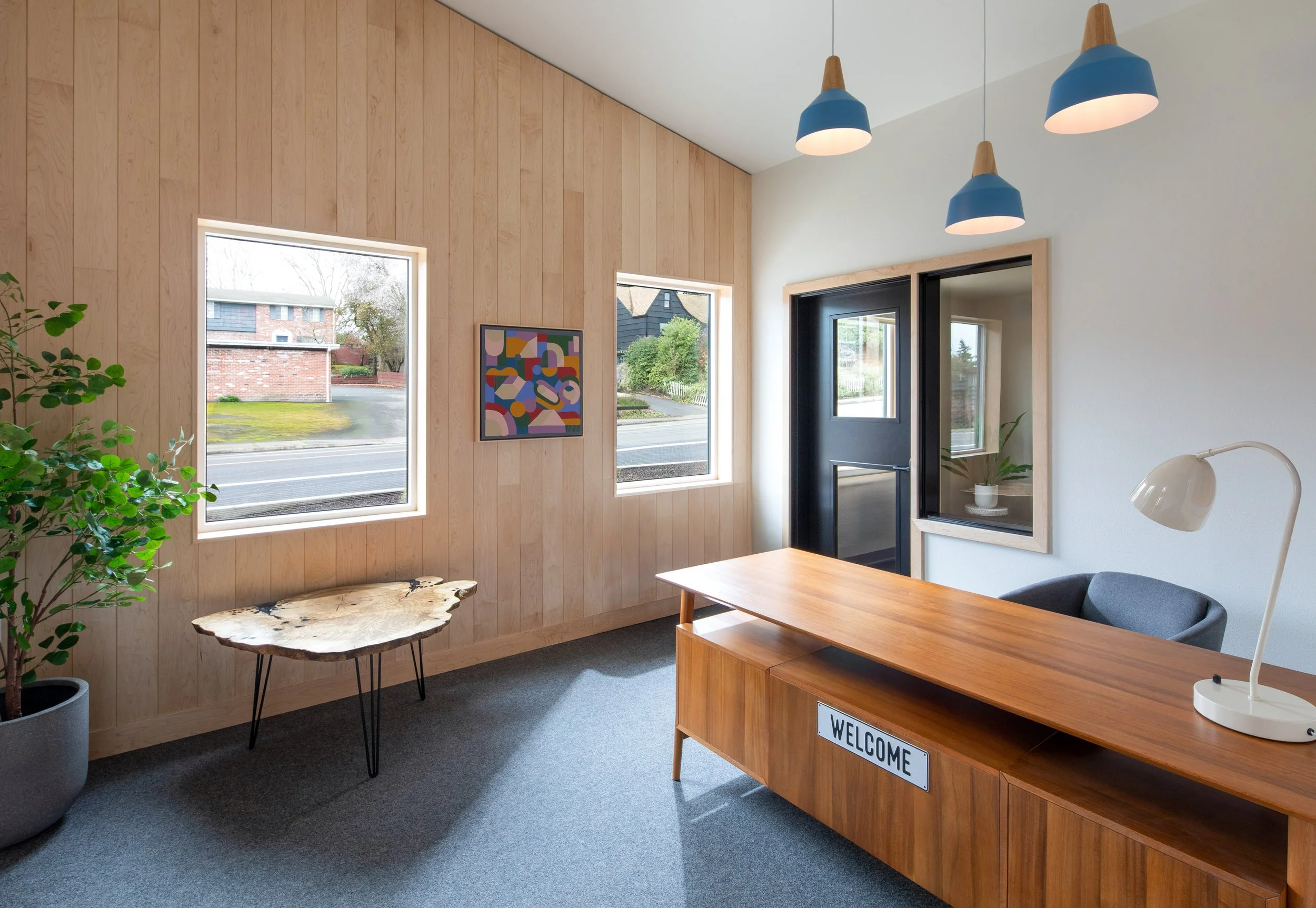
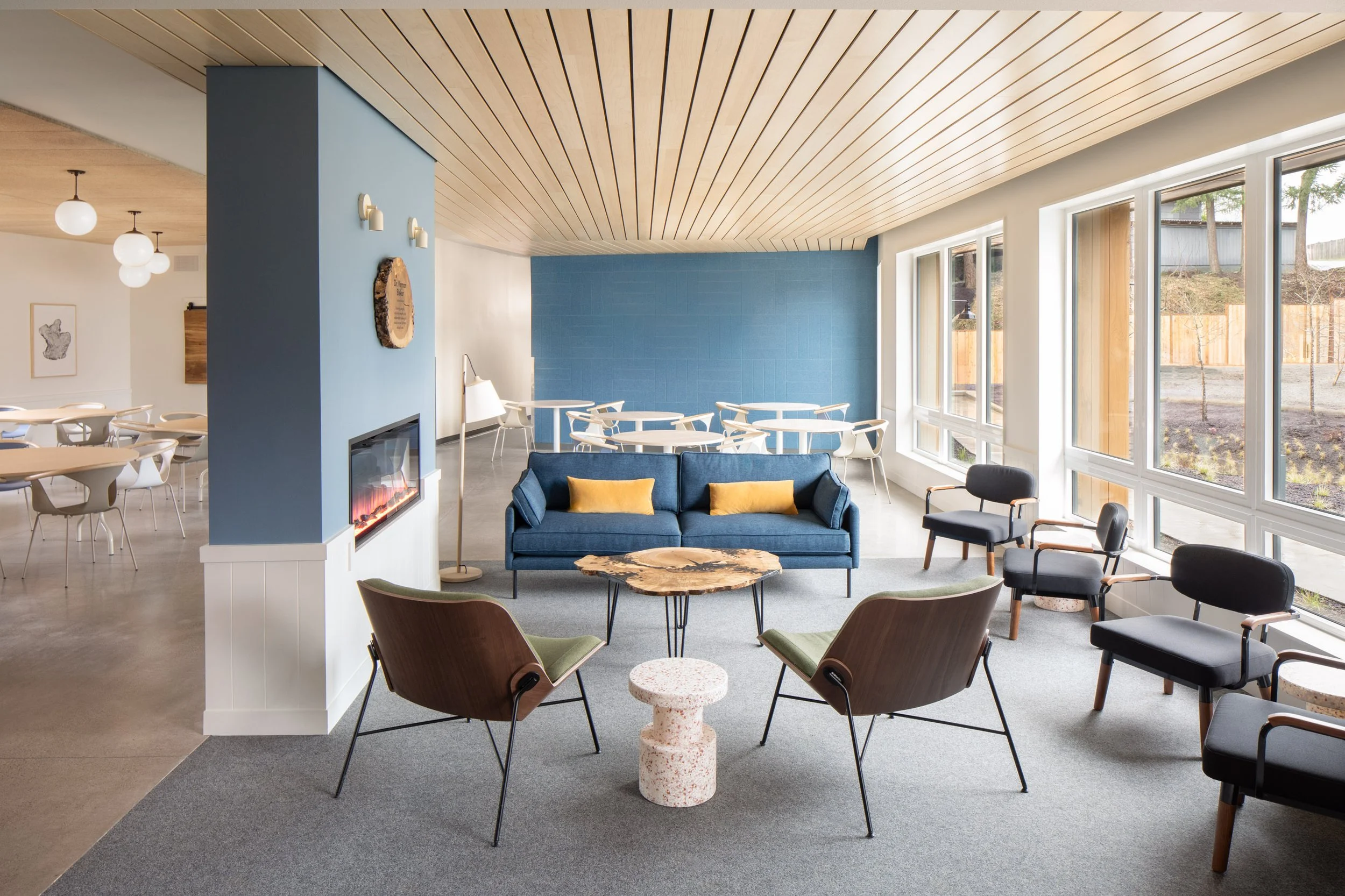
Access Center Lounge
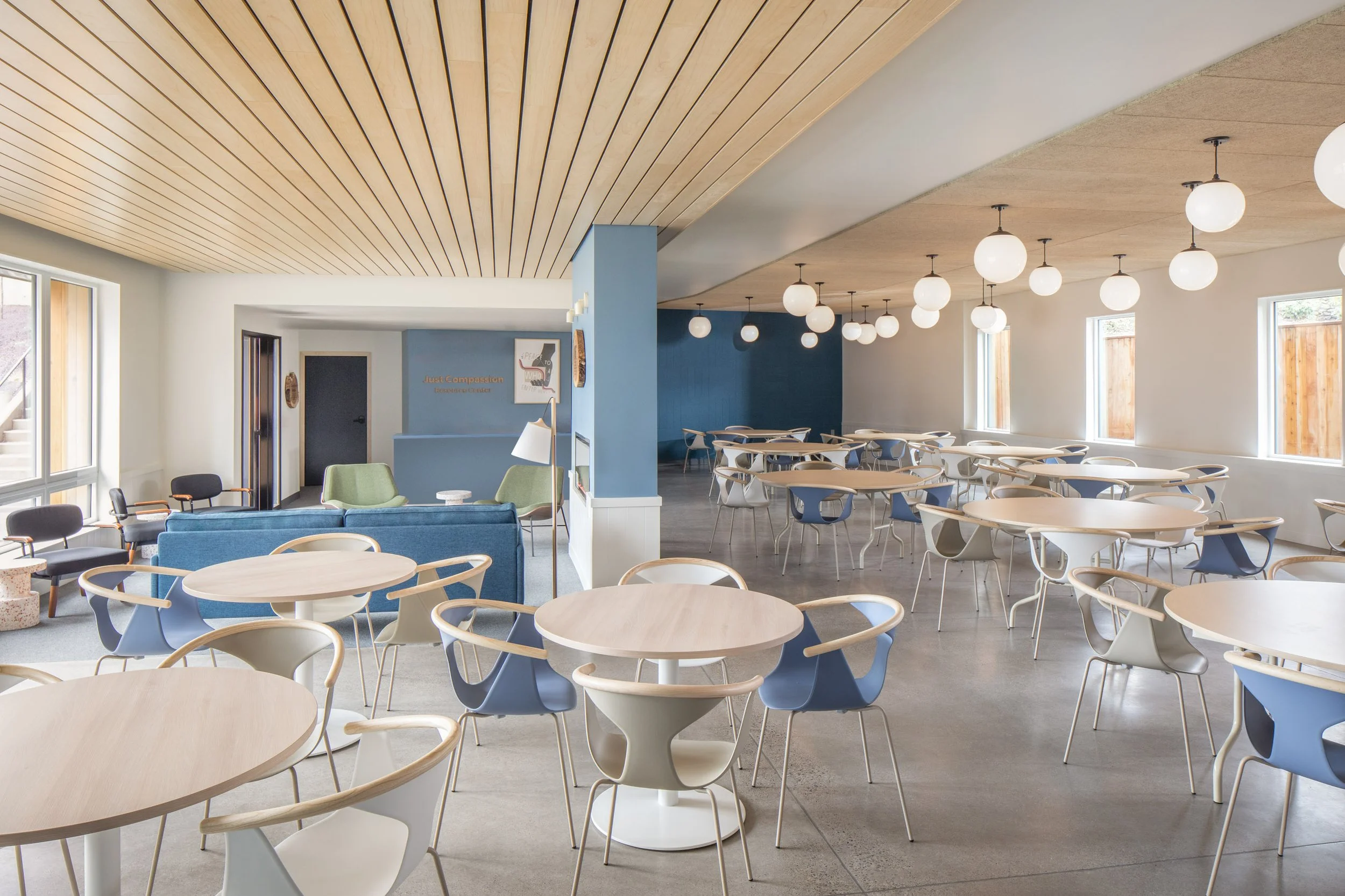
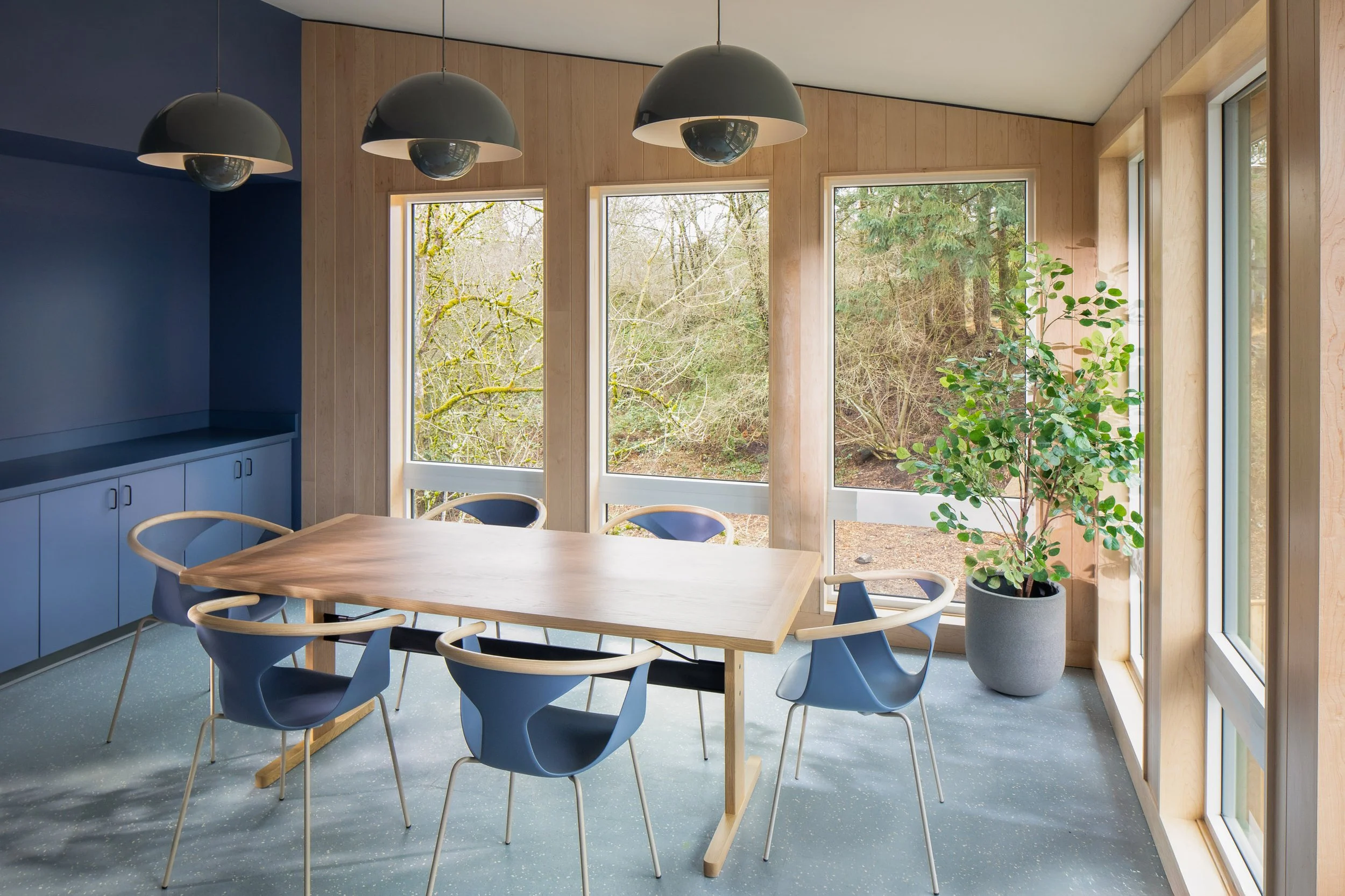
Access Center Dining Area
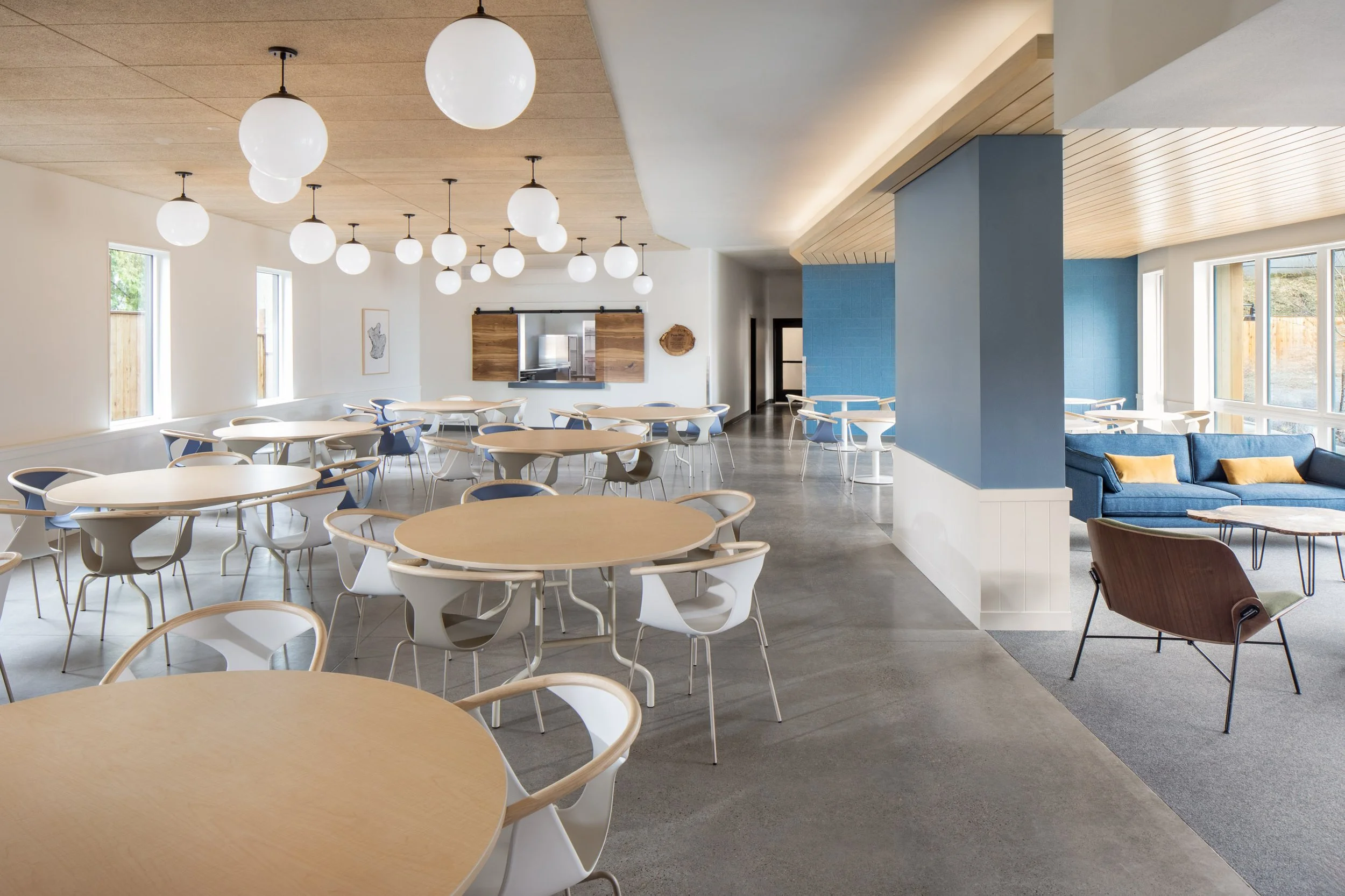
Access Center Dining Area
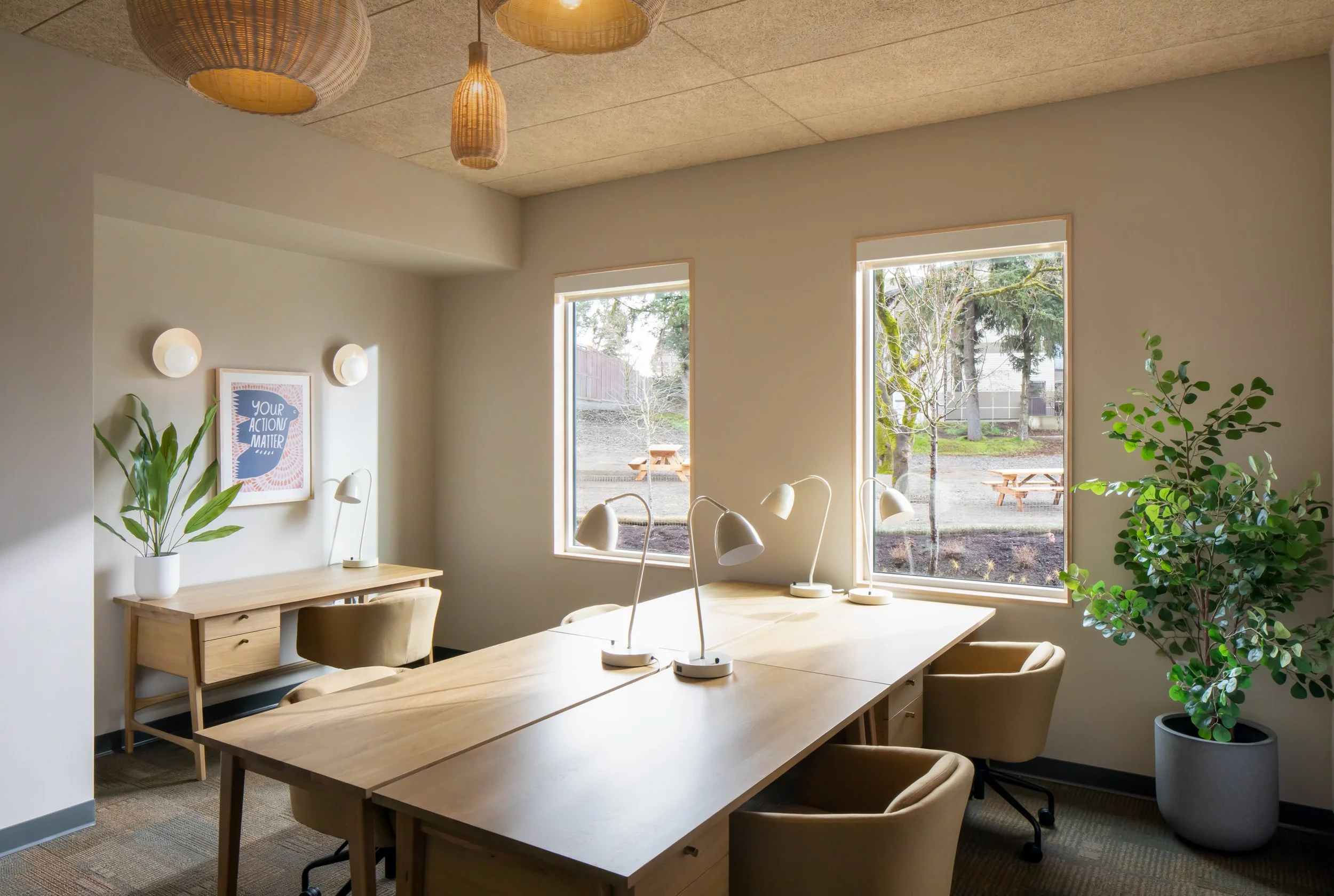
Staff Offices
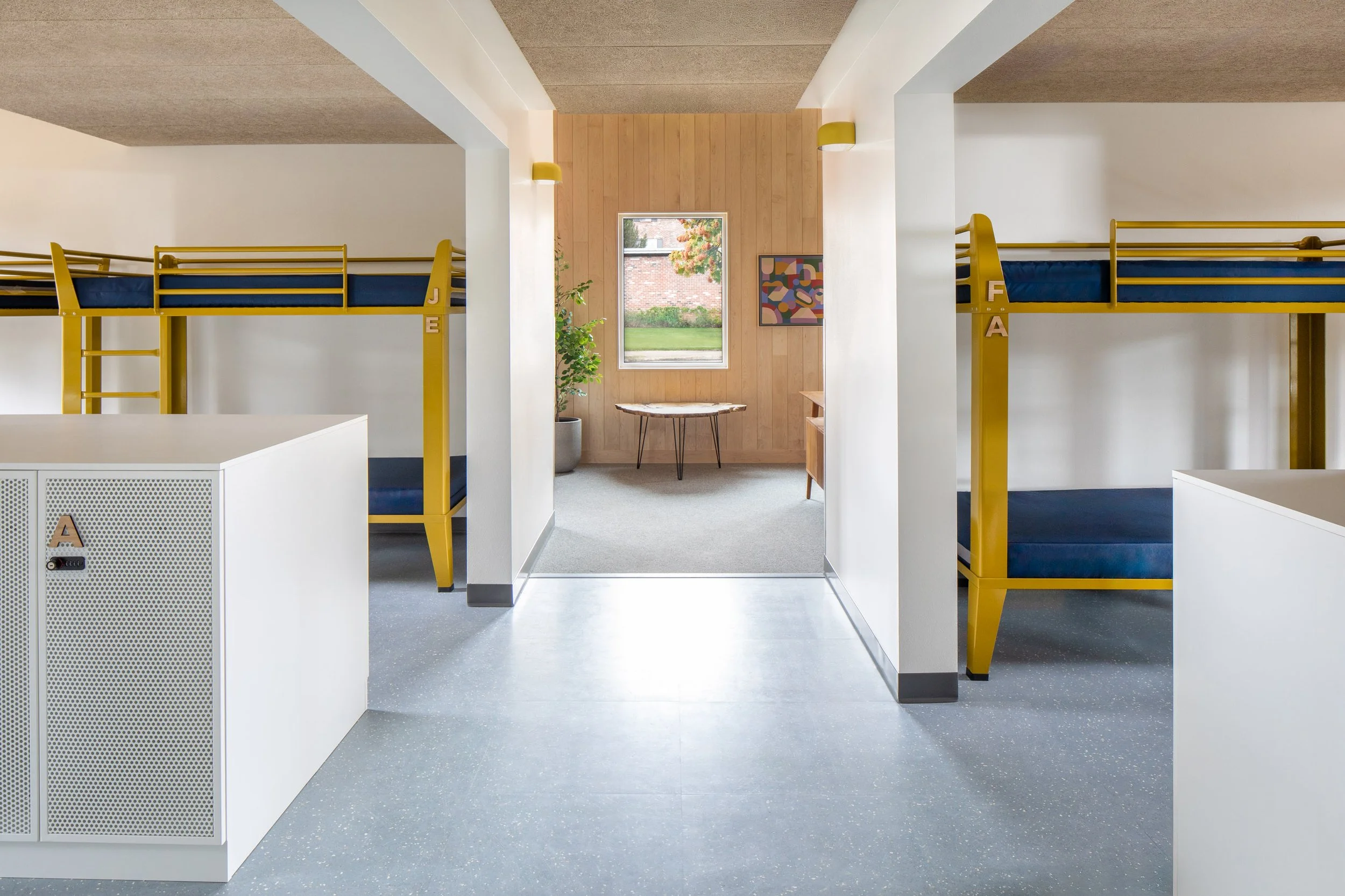
Shelter Hallway
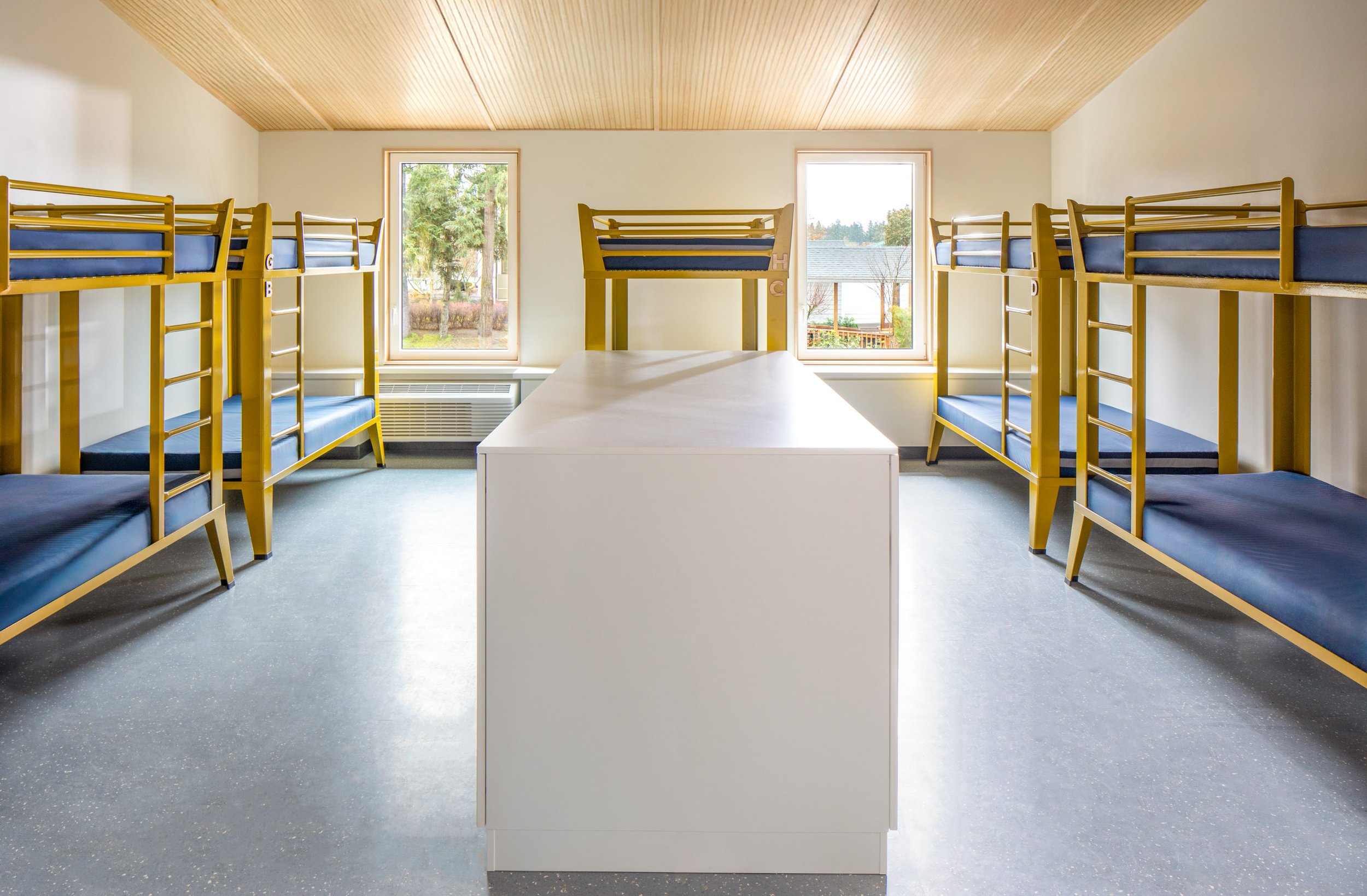
Shelter Sleeping Bay
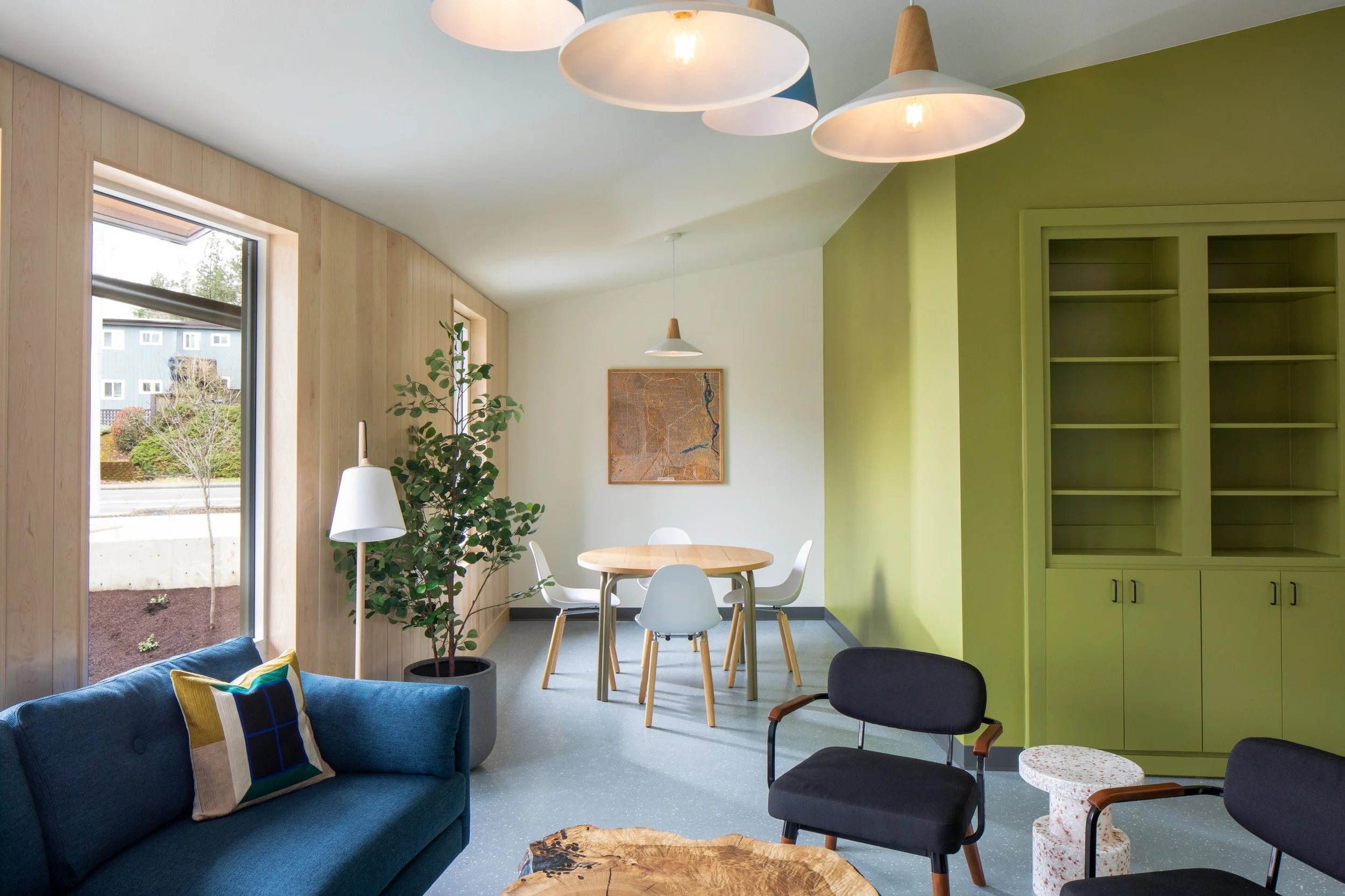
Shelter Lounge
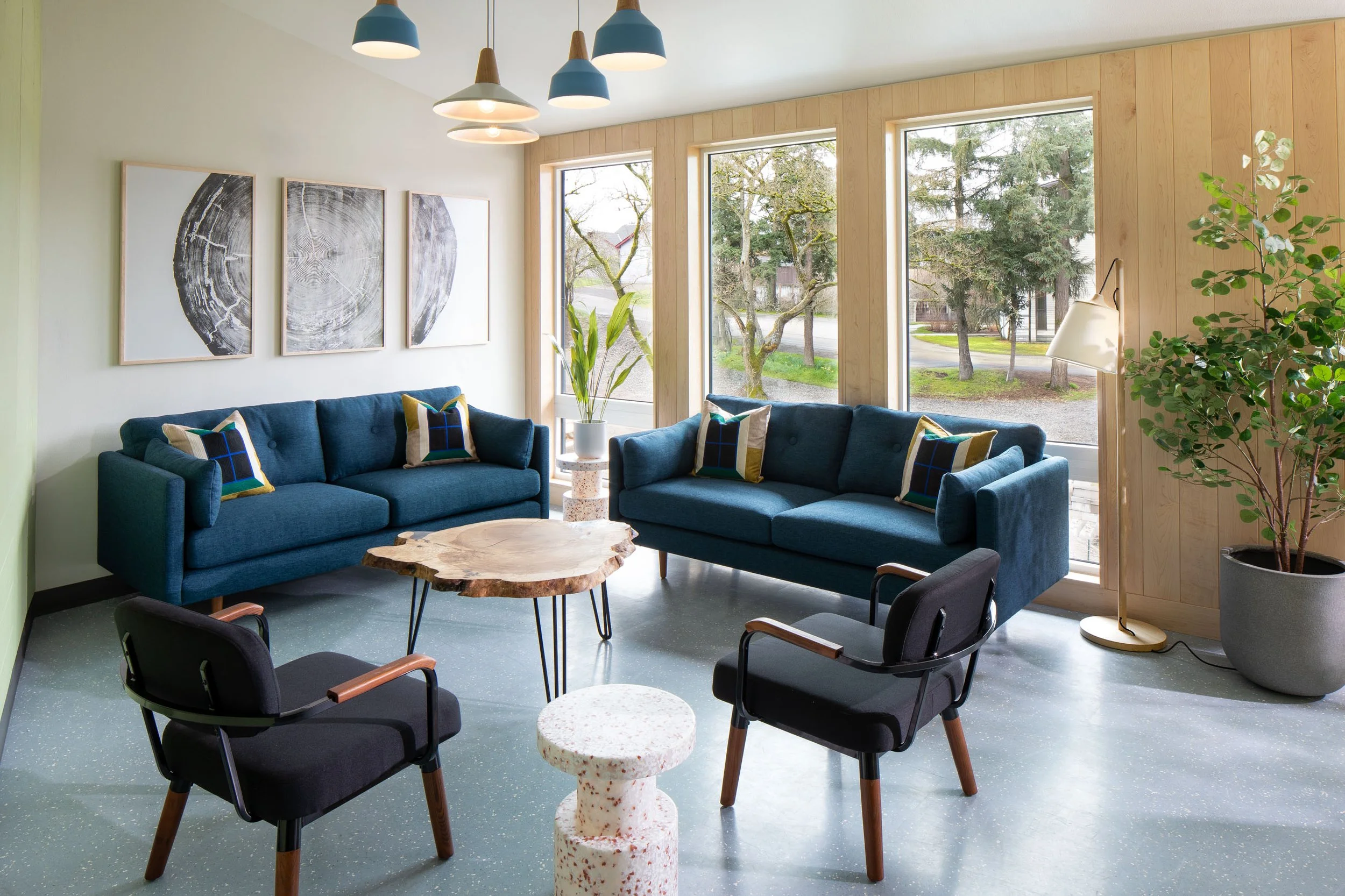
Shelter Lounge
A Sustainable Approach
ENERGY
Just Compassion was designed with a commitment to sustainability and long-term energy performance, employing passive design strategies to minimize environmental impact. The building’s east-west orientation and south-facing roof are optimized for solar energy production, with the goal of eliminating operational energy costs. The building envelope exceeds code efficiency requirements, incorporating superior insulation and high-performance windows to achieve exceptional Energy Use Intensity (EUI) of 16. These strategies position the project as a durable, healthy, and future-ready resource for the community.
WATER
Water efficiency was prioritized, earning all Earth Advantage Certification water credits. The site captures and treats 100% of rainfall through LIDA swales and underground retention, returning water naturally to the soil. Plumbing fixtures are WaterSense-qualified, irrigation is managed by a WaterSense-certified controller, and low-water plantings minimize demand.
The project also funded off-site wetland preservation, extending its positive impact beyond the property. Together, these strategies create a highly efficient, resilient, and regenerative model for sustainable building design.
LAND
In developing the landscape design with Studio Wild, we partnered with Columbia Land Trust's Backyard Habitat Certification Program, a nonprofit dedicated to transforming urban areas into native habitats by strengthening wildlife corridors and fostering connectivity between public and private lands.
The garden areas of Just Compassion feature an abundant mix of native perennials, trees, and shrubs, attracting pollinators and supporting local wildlife. Plant selections were made with thoughtful intention to be low-maintenance and with minimal water needs.